Pappardelle with Seasonal Vegetables
There’s something magical about cooking a comforting dish like Pappardelle with Seasonal Vegetables that can instantly transform a regular day into something special. I remember the first time I made this dish in my tiny apartment kitchen, with fresh vegetables lining the counter and the aroma of garlic wafting through the air. It was spring, and I had just returned from the farmers’ market, my bag bursting with vibrant produce. The colors and scents seemed to dance together as I started preparing the meal, excited to share it with friends for a cozy gathering. This dish is not just about the flavors; it’s about the joy of cooking, the laughter shared around the table, and the satisfaction of creating something beautiful and nourishing from simple ingredients.
Recipe Snapshot
35 mins
20 mins
15 mins
Medium
420 kcal
12 g
Gluten-Free, Low FODMAP
18 g
Saucepan, Wooden Spoon, Grater, Skillet, Chef’s Knife, Frying Pan, Large Pot
Why This Pappardelle with Seasonal Vegetables Is So Good
Seasonal Freshness
One of the most compelling reasons to love Pappardelle with Seasonal Vegetables is the use of fresh, seasonal ingredients. The vibrant colors of the vegetables not only make the dish visually appealing but also pack it with nutrients. Using ingredients that are in season ensures maximum flavor and freshness, making each bite a delightful experience. I particularly enjoy visiting local markets to see what vegetables are available, letting nature guide my cooking.
Easy to Prepare
This recipe is incredibly easy to prepare, making it perfect for weeknight dinners or casual gatherings. With just a few simple steps, you can whip up a delicious meal that looks and tastes gourmet. Cooking with fresh ingredients doesn’t have to be complicated. The gentle simmering of the vegetables along with the pasta creates a harmony of flavors that feels like a lot more effort than it actually is.
Versatile and Customizable
Another reason to fall in love with this dish is its versatility. You can easily swap out the vegetables based on what you have on hand or what’s in season. Feel free to experiment with your favorites, whether it’s zucchini or bell peppers. This recipe can easily be tailored to suit your personal taste or dietary preferences, making it a staple that can be enjoyed throughout the year.
Perfect for Sharing
The joy of Pappardelle with Seasonal Vegetables also lies in its ability to bring people together. It’s the perfect dish for sharing with family and friends, inviting everyone to gather around the table for a warm meal. There’s something about a big bowl of pasta that encourages conversation and connection. It’s a dish that invites laughter and storytelling, making memories that linger long after the last bite.
Healthier Option
This recipe is a fantastic way to incorporate more vegetables into your diet without sacrificing flavor. With a blend of fresh herbs and the natural sweetness of the vegetables, you’ll find that it’s satisfying and healthful. I love how it allows me to indulge in a comforting pasta dish while still feeling good about what I’m eating.
Essential Ingredients for Pappardelle with Seasonal Vegetables
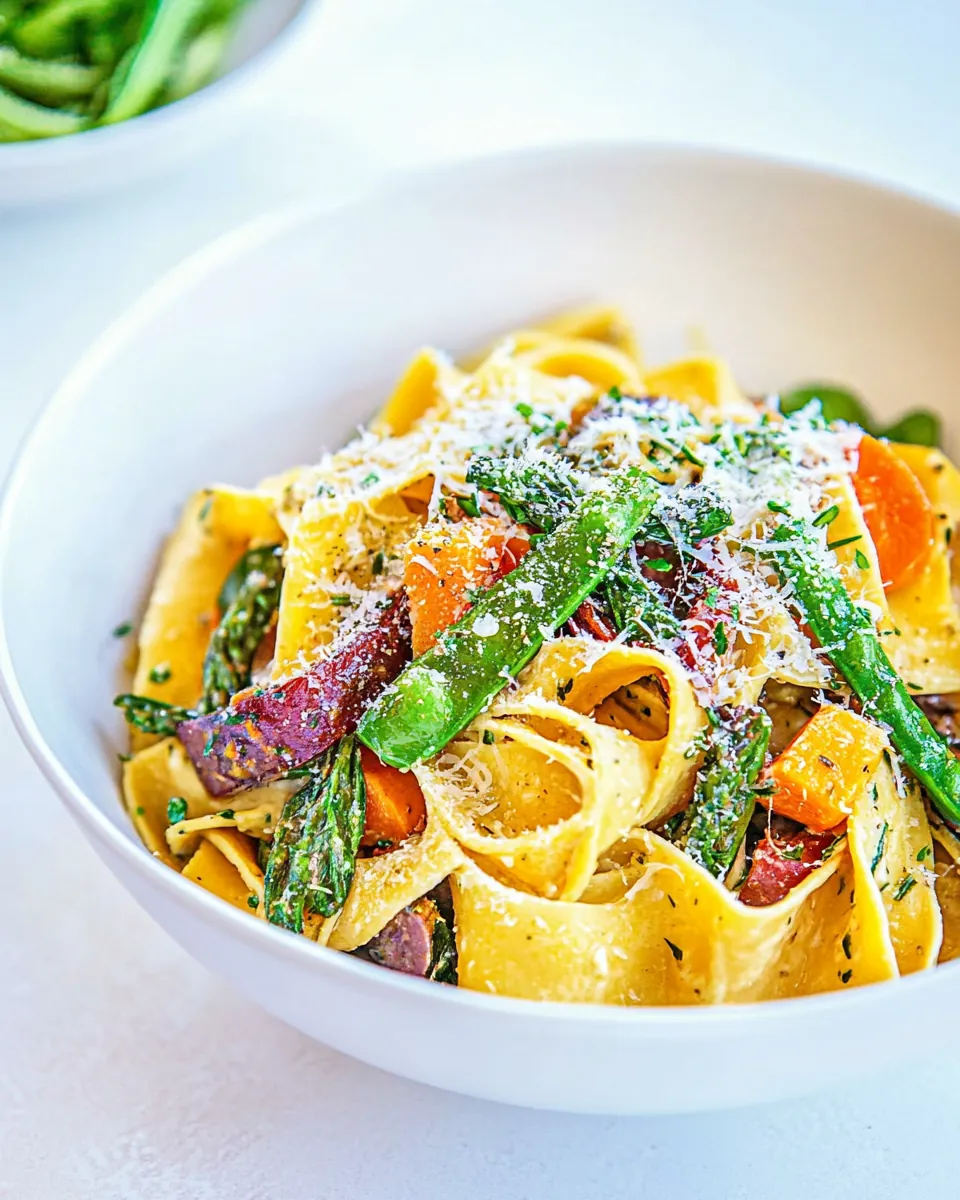
The ingredients for Pappardelle with Seasonal Vegetables are all about celebrating freshness and flavor. Each component plays a crucial role in creating a delightful dish that bursts with color and taste. From the hearty pappardelle to the seasonal vegetables, every ingredient works together harmoniously, highlighting the beauty of simple, wholesome cooking.
- ½ lb pappardelle pasta – This wide pasta shape perfectly captures the sauce and the vibrant vegetables. If you prefer, you can substitute it with linguine.
- 3 cups vegetable stock – A flavorful base that enhances the richness of the dish.
- Kosher salt and freshly ground black pepper – Essential for seasoning and bringing out the flavors of the ingredients.
- 1 clove garlic, minced – Adds a wonderful aroma and depth of flavor.
- 1 bunch asparagus, medium size, ends trimmed – Adds a crisp texture and vibrant green color.
- 1 cup baby carrots, tri-color, if available – Sweet and colorful, these bring a playful aspect to the dish.
- 1 cup spring onions (aka Cipolline) – These tender onions add a mild flavor that complements the dish beautifully.
- ½ cup sweet peas – Sweet and tender, they add a burst of freshness.
- 2 tablespoons basil, fresh, chopped – Bright and aromatic, fresh basil elevates the dish.
- 2 tablespoons parsley, fresh, chopped – Adds a hint of earthiness and freshness.
- 2 tablespoons thyme, fresh, chopped – This herb infuses the dish with its unique flavor.
- 4 tablespoons unsalted butter – For a rich and creamy finish.
- 1 tablespoon lemon zest – Brightens the dish and adds a refreshing note.
- 1 tablespoon lemon juice – Balances the flavors with a hint of acidity.
- Pea shoots or watercress, for garnish – These add a delicate touch for presentation.
- Freshly grated Parmigiano-Reggiano cheese, optional, for garnish – A lovely finishing touch that adds creaminess.
Pappardelle with Seasonal Vegetables Instructions
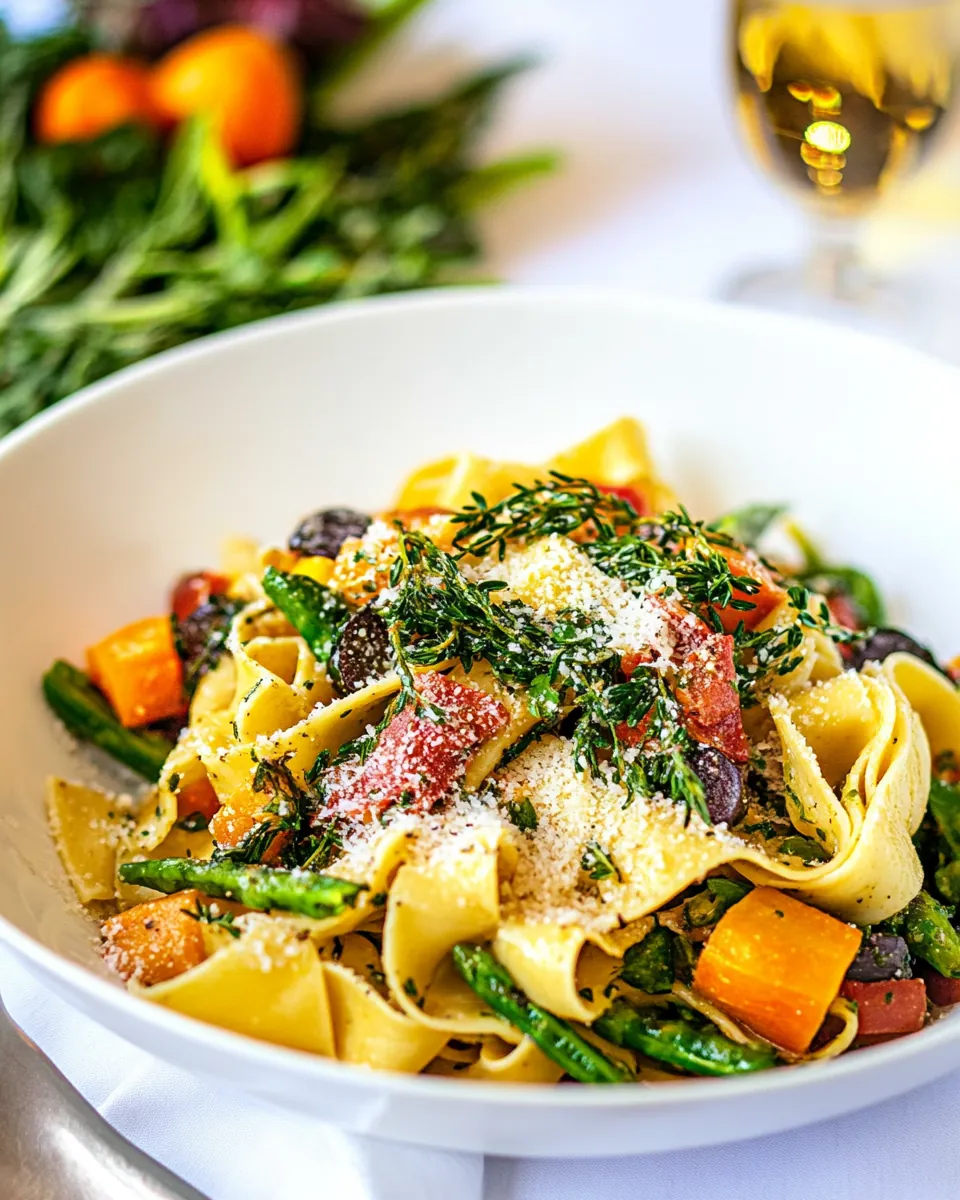
Cooking Pappardelle with Seasonal Vegetables is a delightful journey that combines fresh ingredients and simple steps. Let’s dive into the process, ensuring that each step embraces the vibrant flavors of the dish.
- In a small pan, bring 2 cups of water to a boil. Add the spring onions and allow them to simmer for about 5 minutes. This process softens the onions and mellows their flavor.
- Carefully remove the onions with a slotted spoon and set them aside. Cut off the root ends and squeeze the onions out of their skins. This step helps in achieving a smoother texture when combined with other ingredients.
- In a large skillet, pour in the vegetable stock, adding the minced garlic, along with 1 teaspoon of salt and ½ teaspoon of freshly ground black pepper. Bring this mixture to a simmer over medium-high heat. The aroma will be enticing as the garlic sizzles.
- Next, add the baby carrots to the skillet, cover, and allow them to simmer for 5 minutes. This ensures they become tender while retaining their sweetness.
- After 5 minutes, add the remaining asparagus and the previously prepared spring onions back into the skillet. Cover and simmer again for another 5 minutes, or until all the vegetables are soft.
- While the vegetables are cooking, fill a pot with salted water and bring it to a rolling boil. Cook the pappardelle pasta until al dente, about 3 minutes. Keep an eye on it; you want it firm yet tender.
- Once cooked, drain the pasta and add it to the skillet with the vegetables. Stir in the sweet peas, basil, parsley, thyme, unsalted butter, lemon zest, and lemon juice. Gently stir everything together for about 1 minute until the butter is melted and the pasta is beautifully coated.
- Serve the pasta in bowls, garnishing with pea shoots or watercress. If you like, finish with freshly grated Parmigiano-Reggiano cheese, which adds an extra layer of indulgence.
Things Worth Knowing
- Cooking Al Dente: Be cautious not to overcook the pasta. Al dente pasta not only has a better texture but also holds onto the sauce more effectively.
- Storing Leftovers: Store any leftovers in an airtight container in the refrigerator. They’ll stay fresh for up to 3 days.
- Reheating: To reheat, gently warm the pasta in a skillet over low heat, adding a splash of water or stock to loosen it up.
- Seasoning: Always taste and adjust seasoning at the end. Each vegetable could bring a different level of flavor, so don’t hesitate to add more salt or pepper.
Pro Tips and Tweaks
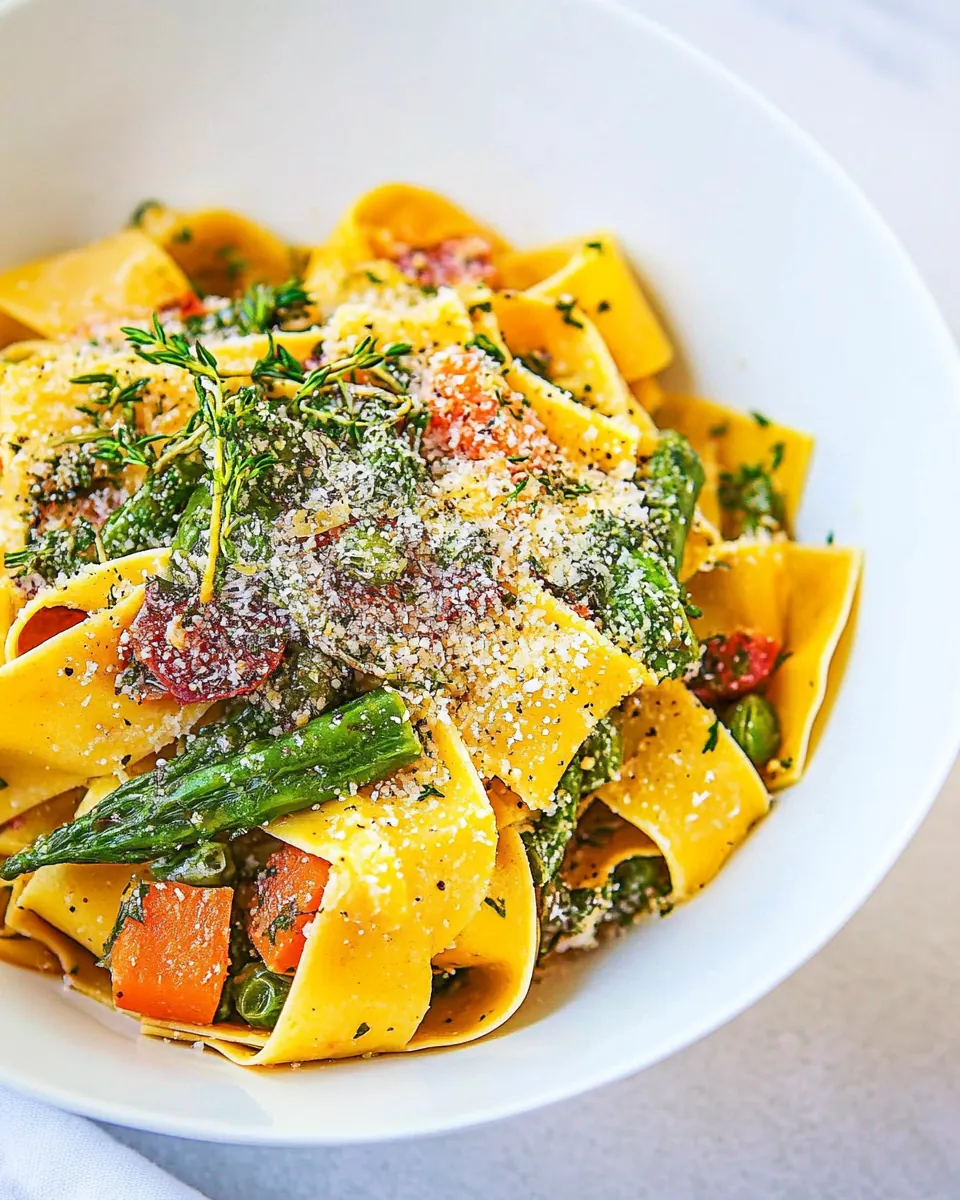
To make your cooking experience even better, here are some practical tips for Pappardelle with Seasonal Vegetables:
- Storage: Store leftovers in an airtight container in the fridge for up to 3 days. Gently reheat before serving.
- Freezing: This dish does not freeze well due to the texture of the vegetables. It’s best enjoyed fresh.
- Pairing: Serve with a side salad for a light meal or garlic bread for a hearty dinner.
- Herb Variations: Experiment with different fresh herbs like tarragon or dill for unique flavors. Just remember to adjust the quantity when using dried herbs.
- Vegetable Choices: Feel free to swap in your favorite seasonal vegetables. Zucchini, bell peppers, or peas work beautifully.
- Cooking the Pasta: Always add salt to your pasta water for enhanced flavor. A good rule of thumb is to use enough salt that the water tastes like the sea.
- Garnishing: Consider adding a drizzle of olive oil or a squeeze of lemon juice just before serving for added freshness.
What Complements This Pappardelle with Seasonal Vegetables
When it comes to serving Pappardelle with Seasonal Vegetables, consider these delightful ideas:
- A Light Salad: A simple green salad with a vinaigrette pairs wonderfully, offering a refreshing contrast to the rich pasta.
- Garlic Bread: Serve warm, crusty garlic bread on the side for a comforting touch.
- Wine Pairing: Although not mentioned, a light white wine can complement the dish beautifully for those who enjoy a drink.
- Seasonal Occasions: This dish is perfect for spring gatherings, picnics, or as a light summer dinner option.
- Garnishing Ideas: Enhance the presentation with a sprinkle of extra herbs or a touch of lemon zest before serving.
- Storage Tips: Keep leftovers in an airtight container in the fridge, and consume within three days for the best quality.
FAQ
Conclusion
The beauty of Pappardelle with Seasonal Vegetables lies in its simplicity and the way it highlights fresh ingredients. This dish is perfect for gatherings or a cozy night in, offering a taste of spring on your plate. I encourage you to give it a try and experience the joy of creating something nourishing and delicious. You won’t be disappointed with the vibrant flavors that come together in every bite!
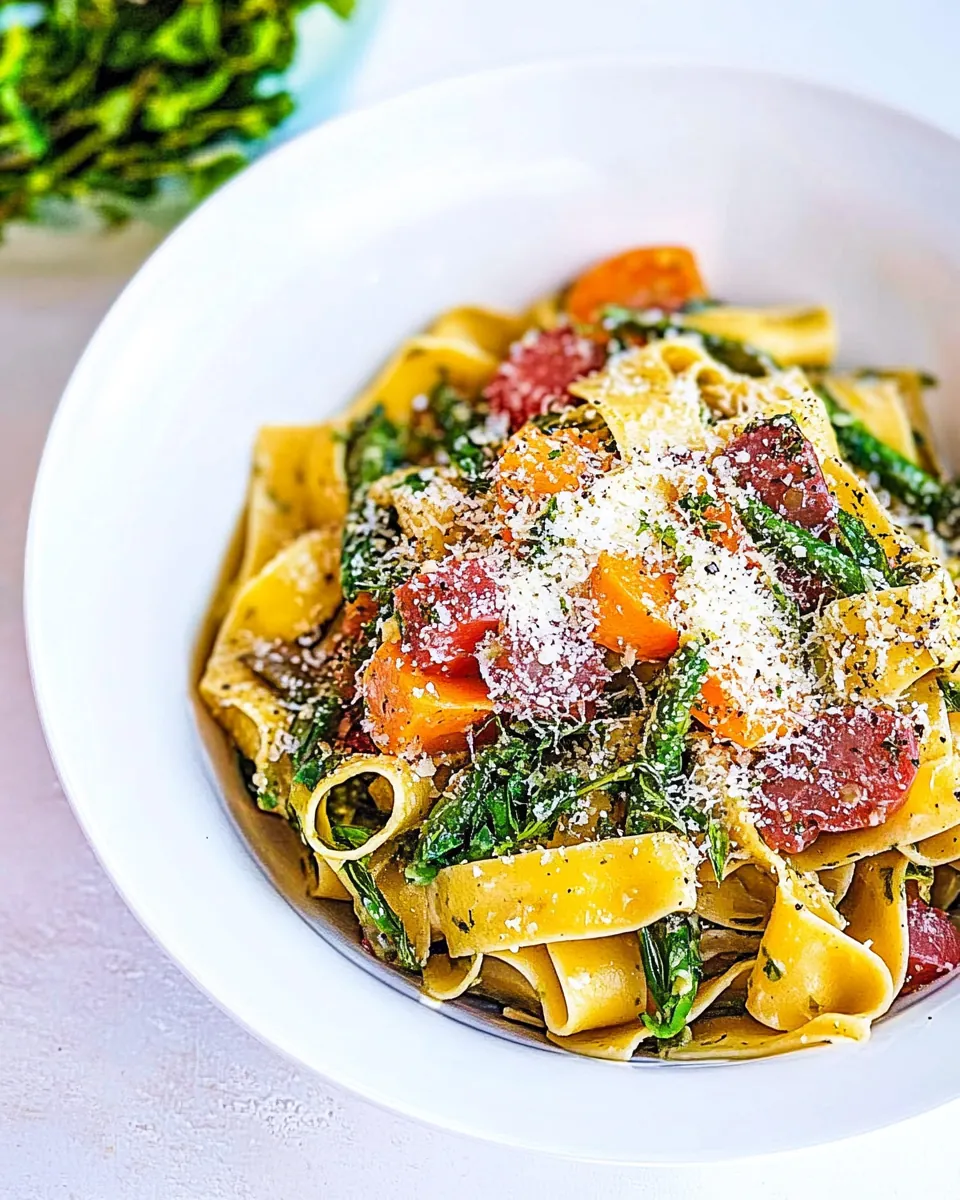
Pappardelle with Seasonal Vegetables
Ingredients
Equipment
Method
- In a small pan, bring 2 cups of water to a boil and add the spring onions and simmer for 5 minutes.
- Remove the onions with a slotted spoon. Cut off the root end, and squeeze the onion out of the skin. Set aside.
- In a large skillet, bring the vegetable stock, garlic, 1 teaspoon salt, and ½ teaspoon of pepper to a simmer over medium-high heat.
- Add the baby carrots, cover, and simmer for 5 minutes.
- Add the remaining asparagus and spring onions, cover again, and simmer for another 5 minutes, or until they are soft.
- Meanwhile, cook the pappardelle pasta in a pot of salted boiling water until al dente, about 3 minutes. Drain.
- Stir in the sweet peas. Next, add the cooked pasta, basil, parsley, thyme, butter, lemon zest, and lemon juice to the stock. Gently stir for 1 minute, or until butter is melted and pasta is coated.
- Serve in pasta bowls and garnish with pea shoots and topped with shaved (or grated) Parmigiano-Reggiano cheese (if using).
Notes
- Pappardelle pasta: can be found in the fresh pasta section of many well-stocked supermarkets, gourmet food shops, or Italian markets. You can also cook lasagna noodles and then cut them into ½-inch strips with a pizza cutter.
- Cipolline onions: can be found in the produce section of many well-stocked supermarkets and at fresh produce markets. They are sometimes called 'boiler onions' or 'spring onions.' If you can't find them, you could go with pearl onions, but we recommend peeling them first.
- Fresh herbs: We recommend using a combination of fresh herbs for the dish. If using dried herbs, only use 1 teaspoon each.
- Leftovers: will keep in the fridge for up to 3 days. Gently reheat on the stove in a skillet until heated through. The dish does not freeze well.