
Kimbap with Omelet and Asparagus
When I think of vibrant flavors and fresh ingredients, Kimbap with Omelet and Asparagus swiftly comes to mind. This delightful dish has a special place in my heart, reminding me of lazy afternoons spent with friends, enjoying the sunshine and savoring every bite. The first time I tried making it at home, I was captivated by how simple yet satisfying it was. The combination of chewy sushi rice, crispy asparagus, and fluffy omelet wrapped in seaweed creates a delightful harmony of textures and flavors that is impossible to resist.
As I meticulously rolled each piece, I felt a connection to the generations of cooks who have prepared this dish, celebrating the art of kimbap-making. It’s more than just food; it’s a way to bring loved ones together around the dining table. Whether for a picnic, a leisurely lunch, or a cozy dinner, Kimbap with Omelet and Asparagus is the perfect dish to share and enjoy. Plus, who doesn’t love the satisfaction of making something that looks so beautiful and tastes incredible?
Recipe Snapshot
1 hr 40 mins
10 mins
90 mins
Medium
250 kcal
10 g
Whole30, Vegan, Gluten-Free
8 g
Saucepan, Wooden Spoon, Skillet, Mixing Bowl, Chef’s Knife, Frying Pan, Large Pot
The Charm of This Kimbap with Omelet and Asparagus
1. A Nutritional Powerhouse
One reason I adore Kimbap with Omelet and Asparagus is its nutritional density. Packed with fresh vegetables like asparagus and green onions, it delivers essential vitamins and minerals. The addition of eggs provides a healthy dose of protein, making it a well-rounded meal.
2. Perfect for Any Occasion
This dish is incredibly versatile. Whether it’s a casual family lunch or a fancy gathering with friends, Kimbap with Omelet and Asparagus fits right in. It can be served as a light snack or as part of a larger spread, making it a fantastic choice for entertaining.
3. Simple Yet Sophisticated
What I love most is how easy it is to prepare. The steps are straightforward, yet the end result feels gourmet. When you slice into the rolled kimbap and see the colorful filling, it gives off a special impression that you’ve spent hours in the kitchen.
4. Endless Customizations
Another fun aspect of kimbap is the endless possibilities for customization. While I’ve shared my version with omelet and asparagus, you can easily switch up the ingredients based on your preferences or what’s in season. Adding smoked salmon or other veggies can create unique flavor profiles every time.
5. Great for Meal Prep
If you’re like me and love meal prepping, Kimbap with Omelet and Asparagus is an excellent choice. The rolls can be made ahead of time and stored in the refrigerator, making them a convenient grab-and-go option for busy days.
6. A Fun Cooking Activity
Making kimbap is not just cooking; it’s an experience! It’s a fantastic activity to do with family or friends. Rolling the kimbap together can bring laughter and joy, turning meal prep into a fun bonding session.
Ingredients Required for Kimbap with Omelet and Asparagus
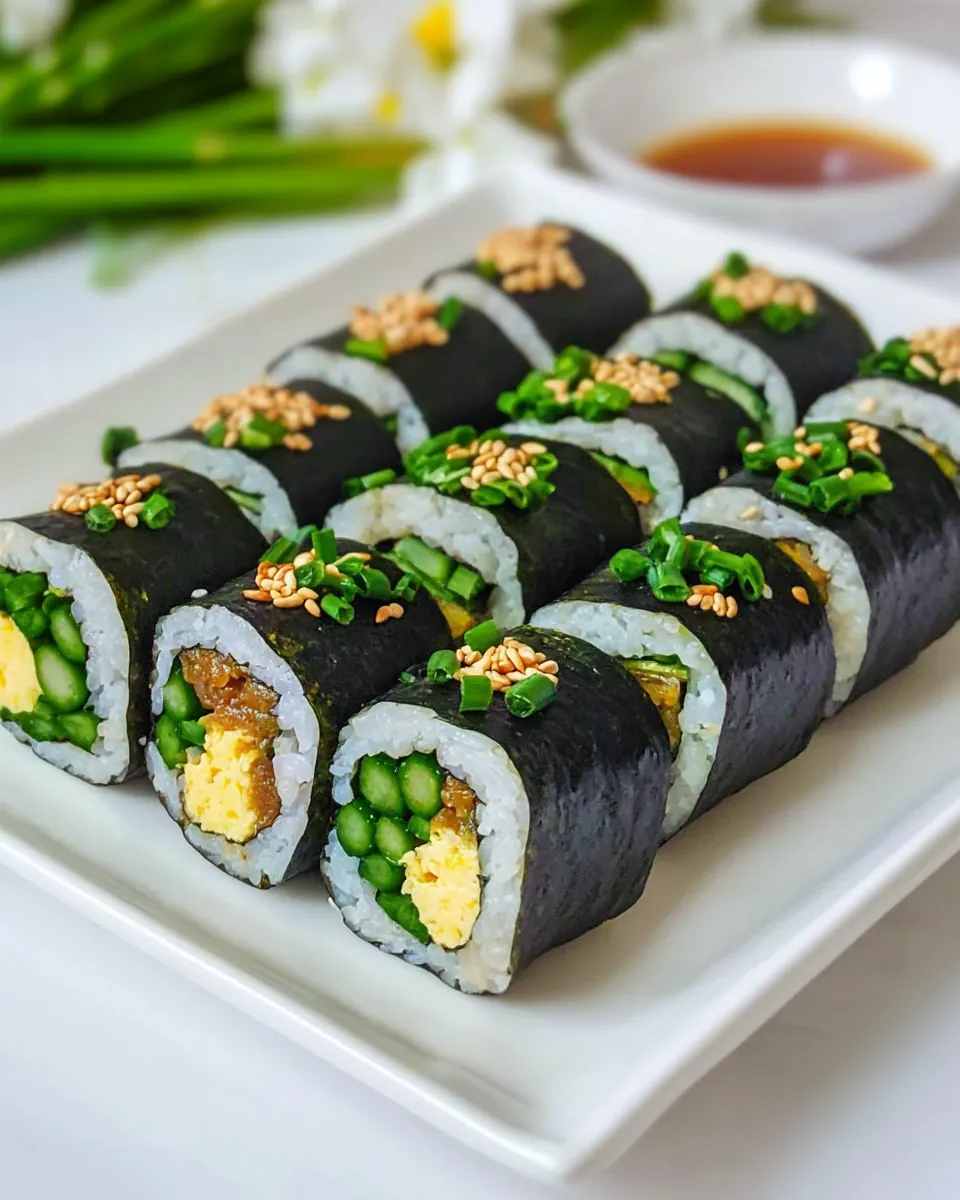
The ingredients for Kimbap with Omelet and Asparagus are a celebration of freshness and flavor. Each component plays a crucial role in creating the perfect balance in every bite. The star of the show, sushi rice, provides a chewy base, while the seaweed adds a delightful umami flavor. Omelet and asparagus bring in the protein and crunch, making this dish not only tasty but also filling.
- 400g sushi rice: Essential for creating the base of kimbap, the sushi rice should be cooked to a perfect chewiness, ensuring it holds together well when rolled.
- 2 tbsp vinegar: This provides the tangy flavor that balances the richness of the other ingredients.
- 1 tbsp sugar: Adds a hint of sweetness that enhances the overall flavor profile of the rice.
- 1 tsp salt: A necessary ingredient to season the rice and enhance all the other flavors.
- 4 algae leaves (nori): The seaweed sheets wrap everything together, imparting a subtle oceanic flavor.
- 4 eggs: Beaten and cooked to create a fluffy omelet, adding protein and richness.
- 1 tsp soy sauce: Adds depth to the omelet and an additional layer of flavor.
- 1 small green onion: Chopped finely for a fresh, mild onion flavor that complements the dish.
- 8 pcs green asparagus: Provides a crunchy texture and a burst of freshness.
- 30g butter: Used for cooking the omelet and asparagus, enhancing the overall richness.
- salt and pepper: Essential seasonings to taste.
- 1 handful green lettuce: Adds a fresh crunch and complements the other ingredients.
- 30g smoked salmon (optional): For those who enjoy a smoky flavor, this adds a luxurious touch to the rolls.
Recipe Directions for Kimbap with Omelet and Asparagus
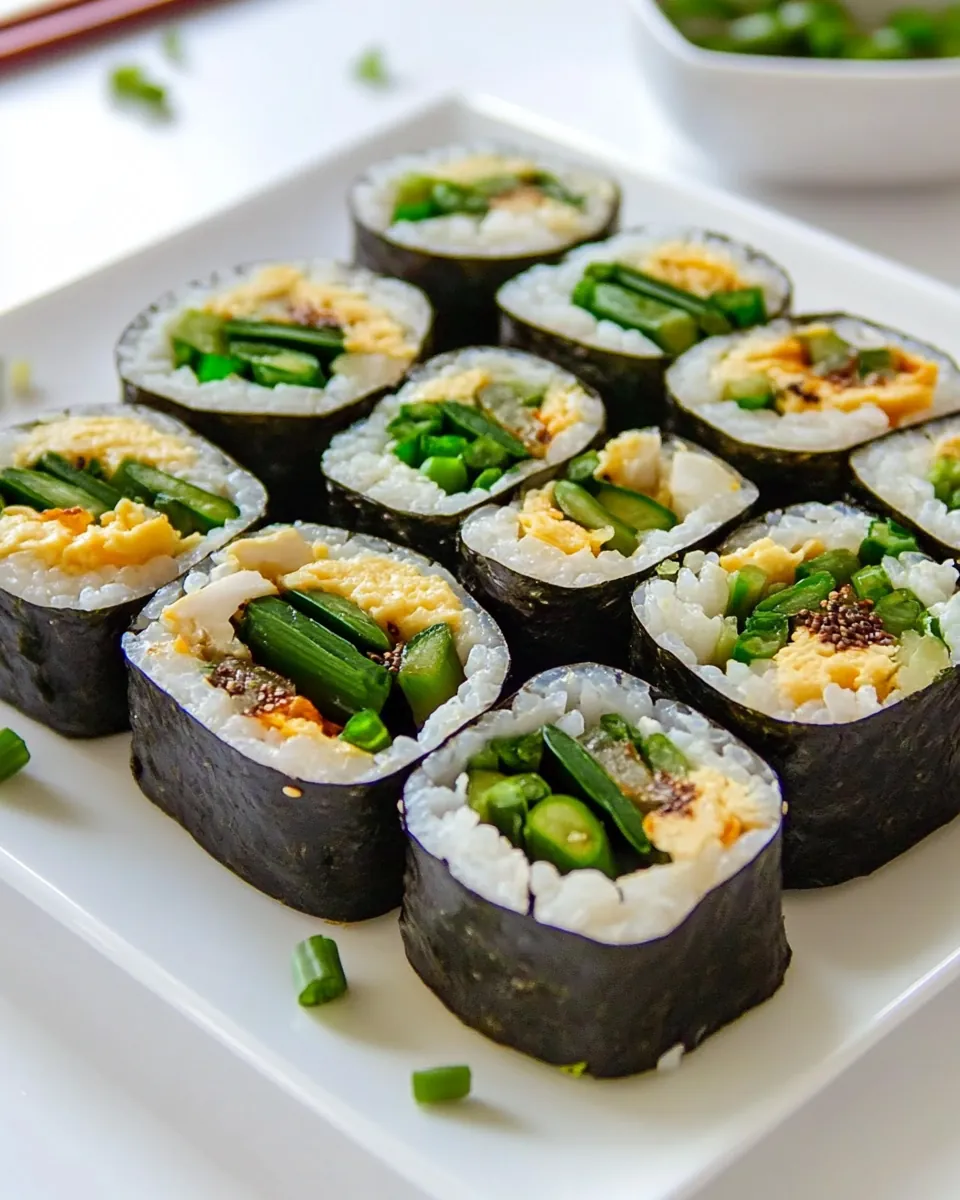
Let’s dive into the delightful process of making Kimbap with Omelet and Asparagus. This recipe is straightforward and engaging, perfect for both novice and experienced cooks. Follow along as we create these beautiful rolls step-by-step!
- Start by washing the sushi rice thoroughly under cold water until the water runs clear. This step is crucial for removing excess starch, which ensures the rice cooks up fluffy and not sticky. After washing, drain the rice well.
- In a pot with a lid, combine the washed sushi rice with 525-550 ml (about 2 1/3 cups) of water and a little salt. Bring it to a boil over medium heat.
- Once boiling, cover the pot with a lid and reduce the heat to low. Allow the rice to simmer for around 15 to 20 minutes. You’ll know it’s done when all the water has been absorbed, and the rice starts to stick slightly to the pot. Avoid stirring it too often to prevent crushing the rice.
- While the rice cooks, prepare the marinade. In a small saucepan, heat the vinegar with the sugar and salt until dissolved. Once the rice is cooked, transfer it to a large bowl, and mix it with the marinade while it’s still warm to enhance flavor.
- Next, let’s prepare the omelet. In a mixing bowl, beat the eggs along with the soy sauce and chopped green onion. Heat a non-stick frying pan over medium heat, adding a little butter.
- Pour the egg mixture into the pan, tilting it to spread evenly. Cook until the omelet is just set, then roll it up carefully. Once cooked, let it cool before slicing it into strips about 1 cm wide.
- Now, it’s time to prepare the asparagus. Trim off the woody ends and heat a pan over high heat with a bit of butter. Add the green asparagus, and season with salt and pepper. Sauté until they become slightly tender but still crisp, which usually takes just a few minutes.
- Gather your sushi rolling mat and cover it with foil for easier cleanup. Place a sheet of nori on the mat, shiny side down, and spread a thin layer of the seasoned rice over about three-quarters of the sheet, leaving the top edge clear to seal the roll.
- To prevent the rice from sticking to your fingers, keep a bowl of cold water nearby. Wet your hands before touching the rice, which will help you spread it evenly without making a mess.
- Place a few strips of the omelet, sautéed asparagus, and a handful of lettuce on the rice. If you’re using smoked salmon, add it here as well for extra flavor.
- Carefully lift the edge of the mat and start rolling the kimbap tightly, pressing gently as you roll to keep everything together. Once rolled, press the ends firmly to seal the roll.
- With a sharp knife, slice the roll into pieces about 1 to 1.5 cm thick. To achieve clean cuts, wipe the knife with a damp cloth between slices.
- Arrange the sliced kimbap on a platter and serve it alongside soy sauce, pickled ginger, and wasabi for a refreshing kick.
Things Worth Knowing
- Use cold water: Wetting your hands with cold water while handling the rice helps prevent sticking and makes rolling easier.
- Quality ingredients: Using fresh, high-quality ingredients greatly enhances the flavor of your kimbap.
- Experiment with fillings: Don’t hesitate to mix and match ingredients based on your preferences, such as adding other vegetables or proteins.
- Store properly: If you have leftovers, store them in an airtight container in the fridge to maintain freshness.
Make It Your Own
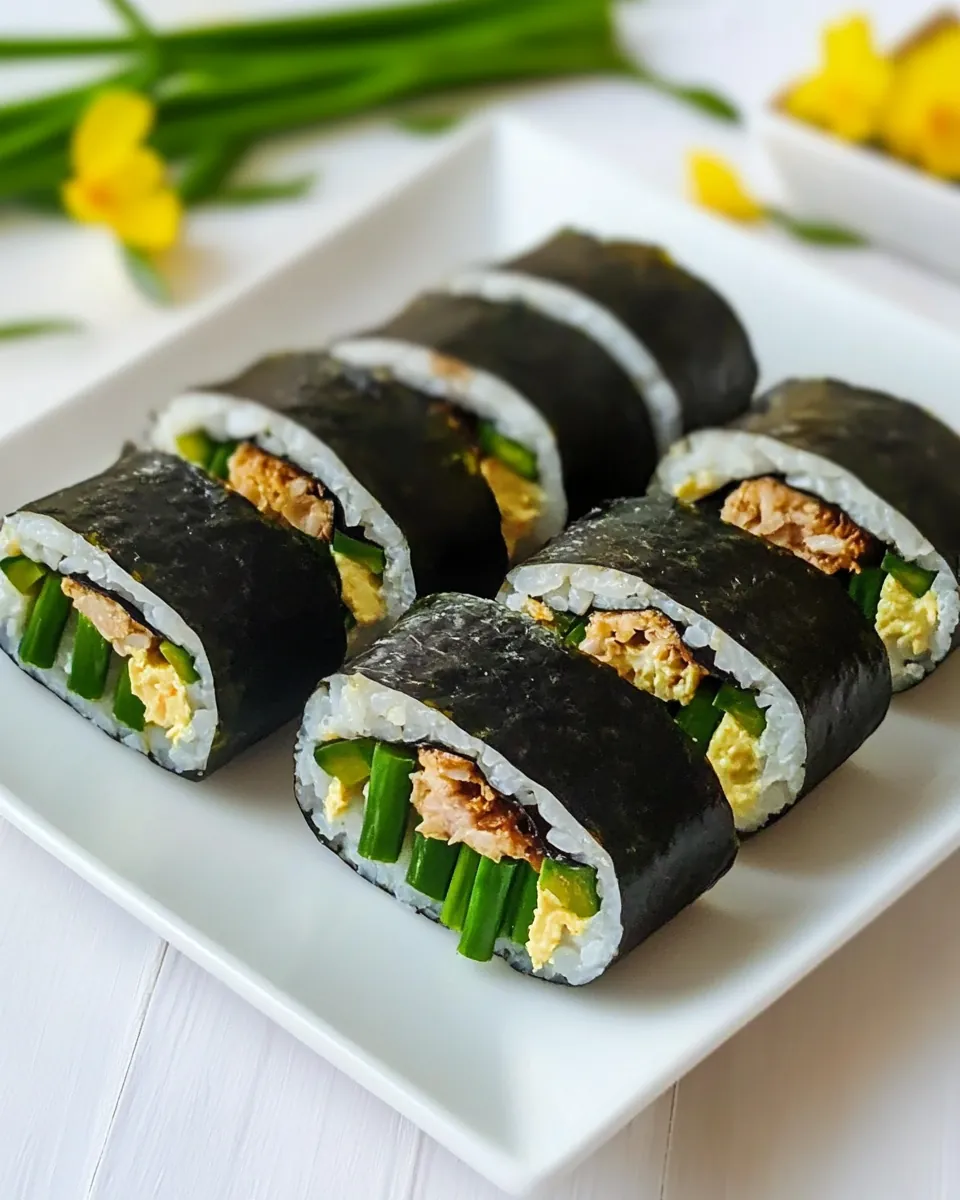
Customizing Kimbap with Omelet and Asparagus is half the fun! Here are some tips to help you personalize this dish to your taste.
- Storage: If you have leftovers, keep them in an airtight container in the fridge. They are best consumed within two days for optimal freshness.
- Freezing: While it’s best fresh, you can freeze uncut kimbap. Just wrap it tightly in plastic wrap and store it in a freezer-safe bag.
- Pairing: Serve kimbap with dipping sauces like soy sauce, sesame oil, or even a spicy gochujang sauce for an extra kick.
- Serving tips: Cut the kimbap into bite-sized pieces for easy serving and to make it more appealing.
- Garnishes: Adding sesame seeds on top of the rolls can enhance the flavor and give a lovely presentation.
Best Served With
Kimbap with Omelet and Asparagus is a versatile dish that pairs beautifully with various sides and drinks. Here are some excellent serving suggestions:- Pickled vegetables: A traditional side like pickled radish or cucumber adds a refreshing crunch.
- Salads: Light salads with sesame dressing complement the flavors without overwhelming the meal.
- Soups: A warm bowl of miso soup or a light broth can balance the meal.
- Occasions: Perfect for picnics, lunchboxes, and casual dinners, it brings people together.
- Beverages: Pair with green tea or Korean barley tea for a soothing combination.
- Storage tips: For a fresh taste, store any leftovers in the refrigerator for up to two days.
FAQ
Conclusion
In conclusion, Kimbap with Omelet and Asparagus is a delightful and versatile dish that brings joy to any meal. With its colorful ingredients and satisfying flavors, it’s perfect for sharing with friends and family. I encourage you to gather your loved ones and try making this dish together. Not only will you enjoy a delicious meal, but you’ll also create wonderful memories in the kitchen.
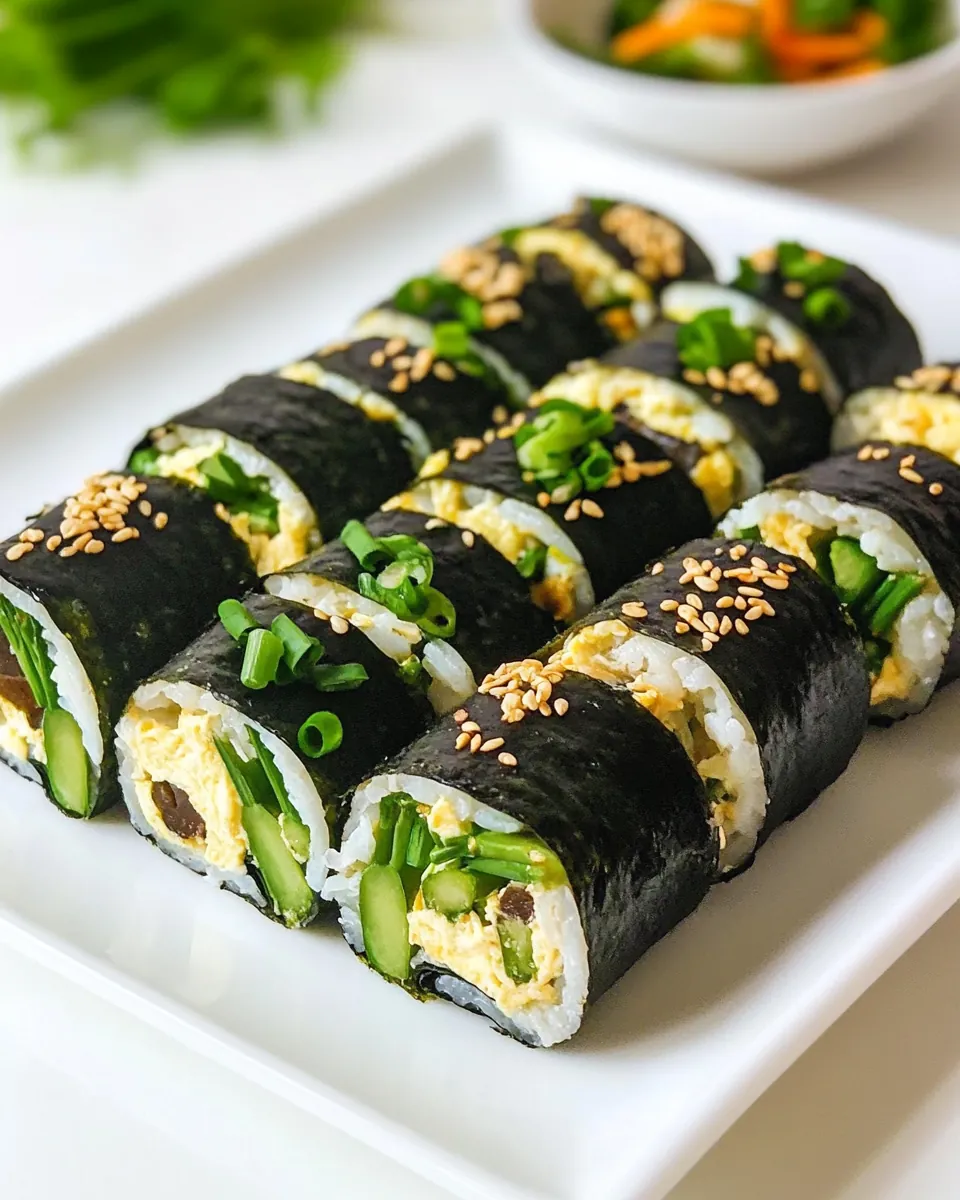
Kimbap with Omelet and Asparagus
Ingredients
Equipment
Method
- Wash the sushi rice thoroughly under cold water until the water runs clear. This step is crucial for removing excess starch, which ensures the rice cooks up fluffy and not sticky. After washing, drain the rice well.
- In a pot with a lid, combine the washed sushi rice with 525-550 ml (about 2 1/3 cups) of water and a little salt. Bring it to a boil over medium heat.
- Once boiling, cover the pot with a lid and reduce the heat to low. Allow the rice to simmer for around 15 to 20 minutes. You’ll know it’s done when all the water has been absorbed and the rice starts to stick slightly to the pot. Avoid stirring it too often to prevent crushing the rice.
- While the rice cooks, prepare the marinade. In a small saucepan, heat the vinegar with the sugar and salt until dissolved. Once the rice is cooked, transfer it to a large bowl and mix it with the marinade while it’s still warm to enhance flavor.
- Next, let’s prepare the omelet. In a mixing bowl, beat the eggs along with the soy sauce and chopped green onion. Heat a non-stick frying pan over medium heat, adding a little butter.
- Pour the egg mixture into the pan, tilting it to spread evenly. Cook until the omelet is just set, then roll it up carefully. Once cooked, let it cool before slicing it into strips about 1 cm wide.
- Now, it’s time to prepare the asparagus. Trim off the woody ends and heat a pan over high heat with a bit of butter. Add the green asparagus, and season with salt and pepper. Sauté until they become slightly tender but still crisp, which usually takes just a few minutes.
- Gather your sushi rolling mat and cover it with foil for easier cleanup. Place a sheet of nori on the mat, shiny side down, and spread a thin layer of the seasoned rice over about three-quarters of the sheet, leaving the top edge clear to seal the roll.
- To prevent the rice from sticking to your fingers, keep a bowl of cold water nearby. Wet your hands before touching the rice, which will help you spread it evenly without making a mess.
- Place a few strips of the omelet, sautéed asparagus, and a handful of lettuce on the rice. If you’re using smoked salmon, add it here as well for extra flavor.
- Carefully lift the edge of the mat and start rolling the kimbap tightly, pressing gently as you roll to keep everything together. Once rolled, press the ends firmly to seal the roll.
- With a sharp knife, slice the roll into pieces about 1 to 1.5 cm thick. To achieve clean cuts, wipe the knife with a damp cloth between slices.
- Arrange the sliced kimbap on a platter and serve it alongside soy sauce, pickled ginger, and wasabi for a refreshing kick.
Notes
- Tip 1: Store leftovers in an airtight container in the fridge. They are best consumed within two days for optimal freshness.
- Tip 2: While it’s best fresh, you can freeze uncut kimbap. Just wrap it tightly in plastic wrap and store it in a freezer-safe bag.
- Tip 3: Serve kimbap with dipping sauces like soy sauce, sesame oil, or even a spicy gochujang sauce for an extra kick.
- Tip 4: Cut the kimbap into bite-sized pieces for easy serving and to make it more appealing.
- Tip 5: Adding sesame seeds on top of the rolls can enhance the flavor and give a lovely presentation.