Pickled Rhubarb
There’s something beautifully nostalgic about making Pickled Rhubarb. Growing up, my grandmother had a patch of rhubarb in her garden that was bursting with tart, vibrant stalks every spring. I remember the excitement of plucking stalks and the sweet-sour smell that filled the kitchen as we prepared our favorite dishes. Making Pickled Rhubarb was always a family affair, a way to preserve the fleeting taste of spring for the months to come. It’s amazing how those simple ingredients can transform into a flavor-packed condiment that pairs perfectly with so many dishes. This recipe is a heartfelt nod to those cherished moments in the kitchen, and it truly encapsulates the essence of homemade goodness.
Recipe Snapshot
15 mins
10 mins
5 mins
Easy
40 kcal
0 g
Keto, Paleo, Whole30
0 g
Chef’s Knife, Frying Pan, Large Pot
When it comes to why I adore making Pickled Rhubarb, the reasons are as vivid as the dish itself. First, the vibrant color adds a splash of joy to any meal, making it a feast for the eyes. Next, the simplicity of the ingredients means that you don’t need to hunt for anything exotic. Plus, the sweet and tangy flavor profile makes it an incredibly versatile addition to your meals. Whether you’re adding a dollop to a cheese platter or tossing it into a salad, it elevates every bite. Additionally, this recipe teaches patience, as the longer you let it sit, the more the flavors develop. Finally, every jar filled with Pickled Rhubarb is a little celebration of spring, reminding me to savor the simple pleasures in life.
The Best Thing About This Pickled Rhubarb
Vibrant Color
There’s no denying that the bright pink hue of Pickled Rhubarb catches the eye. It’s a stunning addition to any dish, adding a pop of color that’s hard to resist.
Simple Ingredients
This recipe requires just a handful of ingredients, making it accessible for anyone. You likely already have most of them in your pantry!
Versatile Flavor Profile
The balance of sweet and tangy in Pickled Rhubarb complements a wide array of dishes, be it cheese boards, salads, or even as a unique topping for meats.
Teaches Patience
Once you’ve made it, you have to wait for the flavors to come together. This anticipation is part of the joy, and it teaches patience in an instant-gratification world.
A Celebration of Spring
Every jar of Pickled Rhubarb is a reflection of springtime, a way to capture its essence and enjoy it long after the season has passed.
Main Ingredients for Pickled Rhubarb
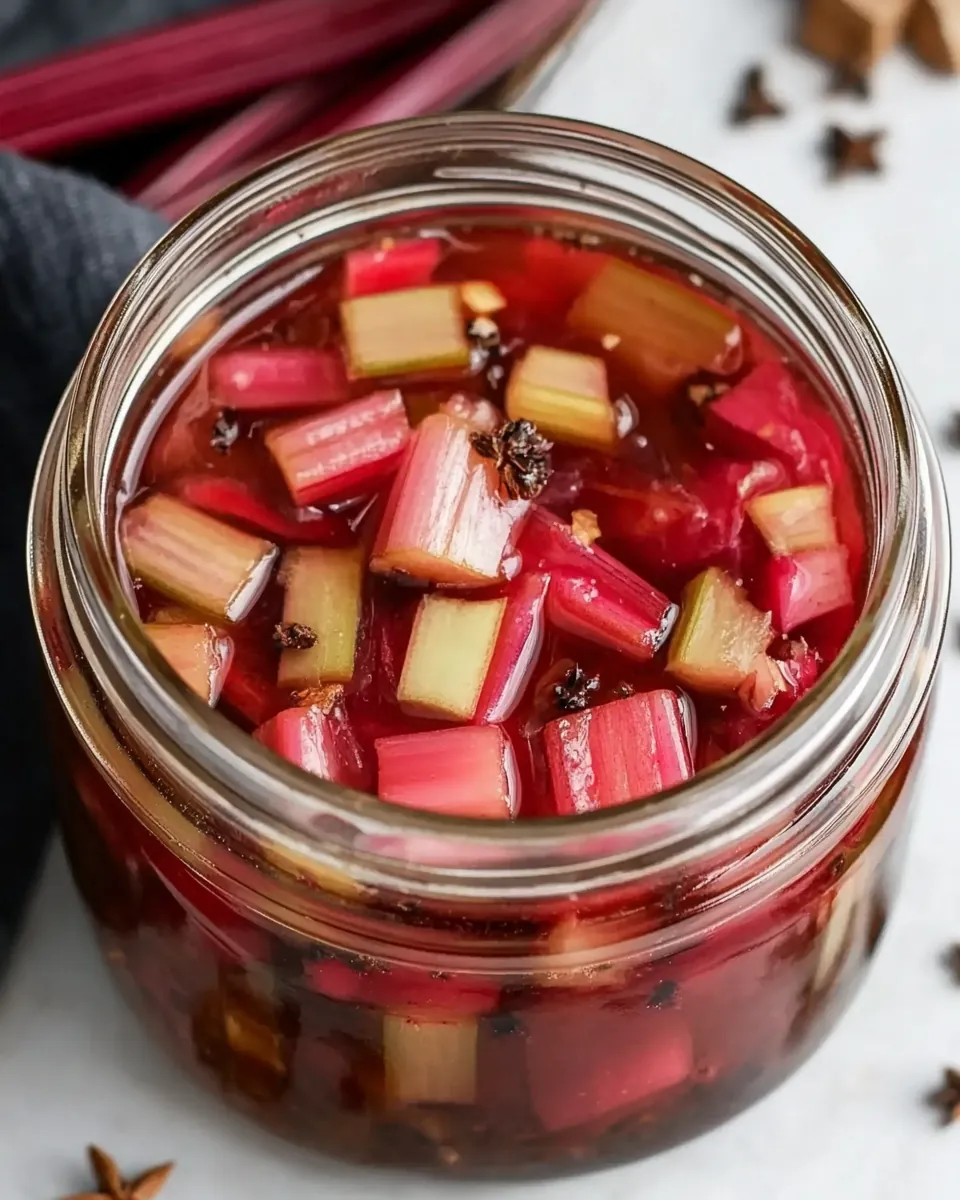
The ingredients for Pickled Rhubarb are simple yet profoundly impactful. Each element works harmoniously to create a balanced flavor that dances on your palate. The star of the show, of course, is the rhubarb, bringing its unique tartness to the forefront, while the vinegar contributes a sharp bite that’s essential for pickling. The garlic and spices add complexity and depth, transforming this humble vegetable into an extraordinary condiment. Together, they embody what it means to preserve and celebrate seasonal ingredients.
- 12 ounces tender red rhubarb, sliced into pieces 1/4 to 1/2 inches thick: This is the primary ingredient, offering a tart flavor that intensifies during the pickling process.
- 3 medium cloves garlic, smashed: Adds a rich, aromatic depth that balances the tartness of the rhubarb.
- 1¼ cups distilled white vinegar: The essential acid for pickling, providing the necessary tang.
- ⅓ cup sugar: Balances the acidity of the vinegar, creating a sweet-tart profile.
- 1¼ teaspoons kosher salt: Enhances flavor and aids in the preservation process.
- 1 teaspoon whole black peppercorns: Offers a subtle warmth and complexity.
- 1 teaspoon yellow mustard seeds: Contributes a slight crunch and unique flavor.
- 2 star anise pods: Infuses a hint of sweetness and aromatic spice that elevates the overall taste.
How to Make Pickled Rhubarb
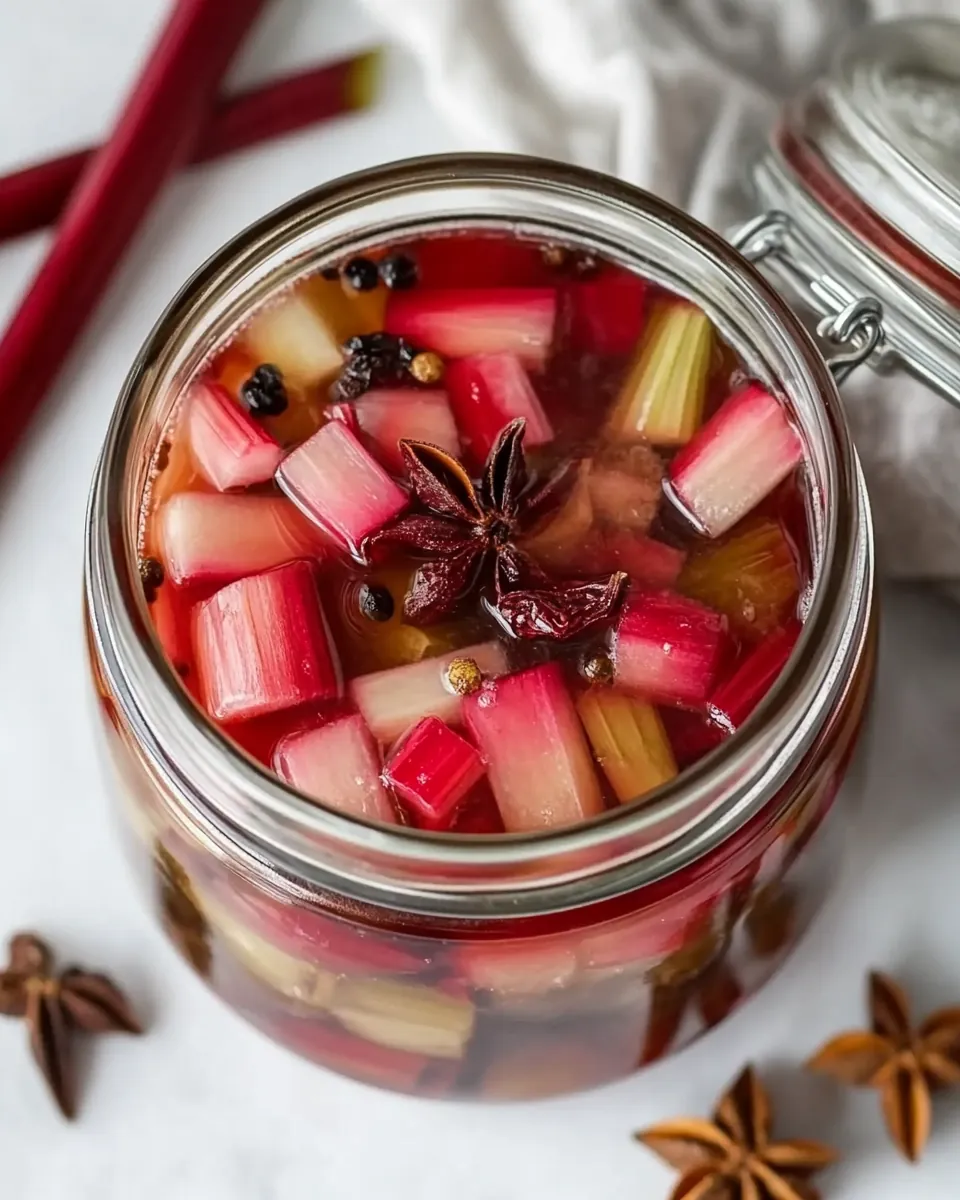
Making Pickled Rhubarb is a delightful process that brings together simple ingredients for a flavorful outcome. Follow these straightforward steps to create your delicious pickles.
- Start with fresh ingredients. Gather your beautiful rhubarb stalks and garlic. You want them to be firm and vibrant, so choose the best you can find.
- Cut the rhubarb into manageable pieces, about 1/4 to 1/2 inch thick. This size ensures they pickle evenly, absorbing all those wonderful flavors.
- Take a quart-sized jar and fill it with the prepared rhubarb and garlic. Leave a little room at the top for the vinegar mixture.
- In a saucepan, combine the remaining ingredients: distilled white vinegar, sugar, kosher salt, whole black peppercorns, yellow mustard seeds, and star anise pods. These components will create your pickling solution.
- Bring this mixture to a boil over medium heat, stirring occasionally to dissolve the sugar and salt. The aroma will be incredible at this point!
- Once boiling, carefully pour the hot liquid over the rhubarb in the jar. Ensure that the liquid covers the rhubarb completely.
- Let the jar cool down to room temperature. This cooling phase is crucial as it allows the flavors to meld beautifully.
- Once cooled, seal the jar tightly and refrigerate it. Ideally, let the Pickled Rhubarb sit for at least 24 hours before enjoying, though a week is even better for stronger flavor.
- Store it in the refrigerator for up to one month. The longer it sits, the more developed the flavor becomes. You’ll find the texture softens beautifully, making it even more delectable.
- Finally, take a moment to admire your homemade Pickled Rhubarb. It’s an accomplishment worth celebrating!
Things Worth Knowing
- Choosing Rhubarb: Look for firm, vibrant stalks without blemishes. Freshness impacts the final product significantly.
- Safety First: Ensure your jars are well sterilized before filling them with the pickling mixture to avoid any spoilage.
- Flavor Development: The flavors in pickling improve with time, so don’t rush—let it sit for at least 24 hours.
- Experiment: Feel free to adjust the spices according to your preferences for a personalized touch!
Customization Ideas
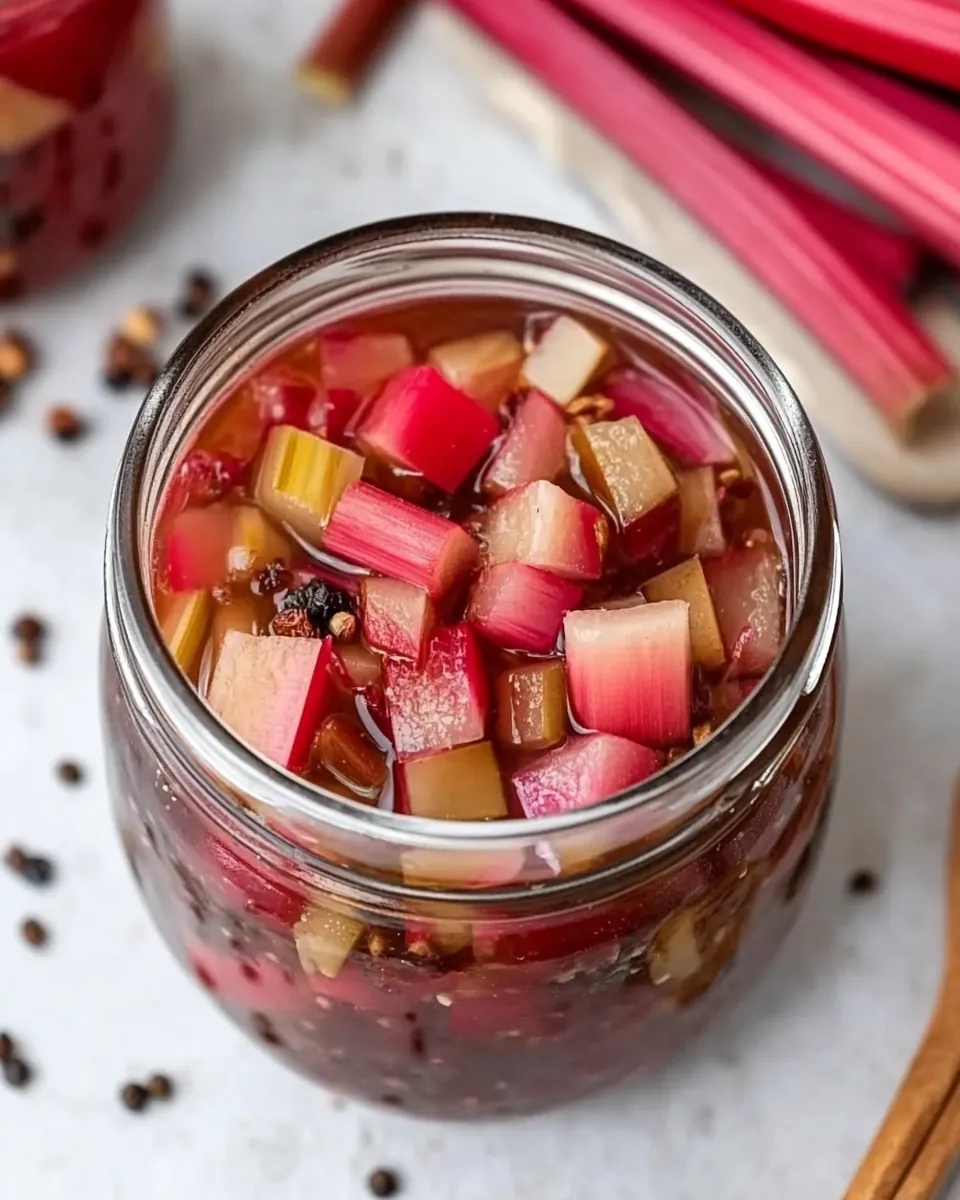
Customizing your Pickled Rhubarb can be a fun and creative process! Here are some ideas to inspire you…
- Storage: Store your Pickled Rhubarb in a cool, dark place for optimal freshness, preferably in the refrigerator.
- Freezing: While not ideal for this recipe, you can freeze rhubarb before pickling if you find it’s too much to use all at once.
- Pairing: Serve with cheese, grilled meats, or as a unique topping for a salad for a flavorful contrast.
- Spice Variations: Swap out the star anise for cinnamon or cloves for a different flavor twist.
- Serving Suggestions: This pickled delight can be enjoyed on sandwiches, with charcuterie boards, or as a condiment for various dishes.
Great Combinations for Pickled Rhubarb
Serving your Pickled Rhubarb opens up a delightful world of flavors. Here are some combinations to consider:
- Cheese Boards: Pair Pickled Rhubarb with creamy cheeses like goat cheese or brie for a wonderful contrast.
- Grilled Meats: The tartness of the rhubarb complements grilled chicken or pork, offering a refreshing balance.
- Salads: Toss a few pieces into your greens for an unexpected zing that brightens up your meal.
- Sandwiches: Use as a tangy topping on sandwiches or wraps for added depth of flavor.
- Picnic Fare: Perfect for summer picnics, it adds a lovely touch to any spread.
- Seasonal Pairings: Enjoy with spring and summer dishes, making it a great accompaniment to seasonal produce.
FAQ
Conclusion
In conclusion, Pickled Rhubarb is not just a recipe; it’s a beautiful way to capture the flavors of spring and add a burst of taste to your meals. I encourage you to try this delightful dish and see how it can transform your culinary creations. Share it with family and friends, and enjoy the smiles it brings. Happy pickling!
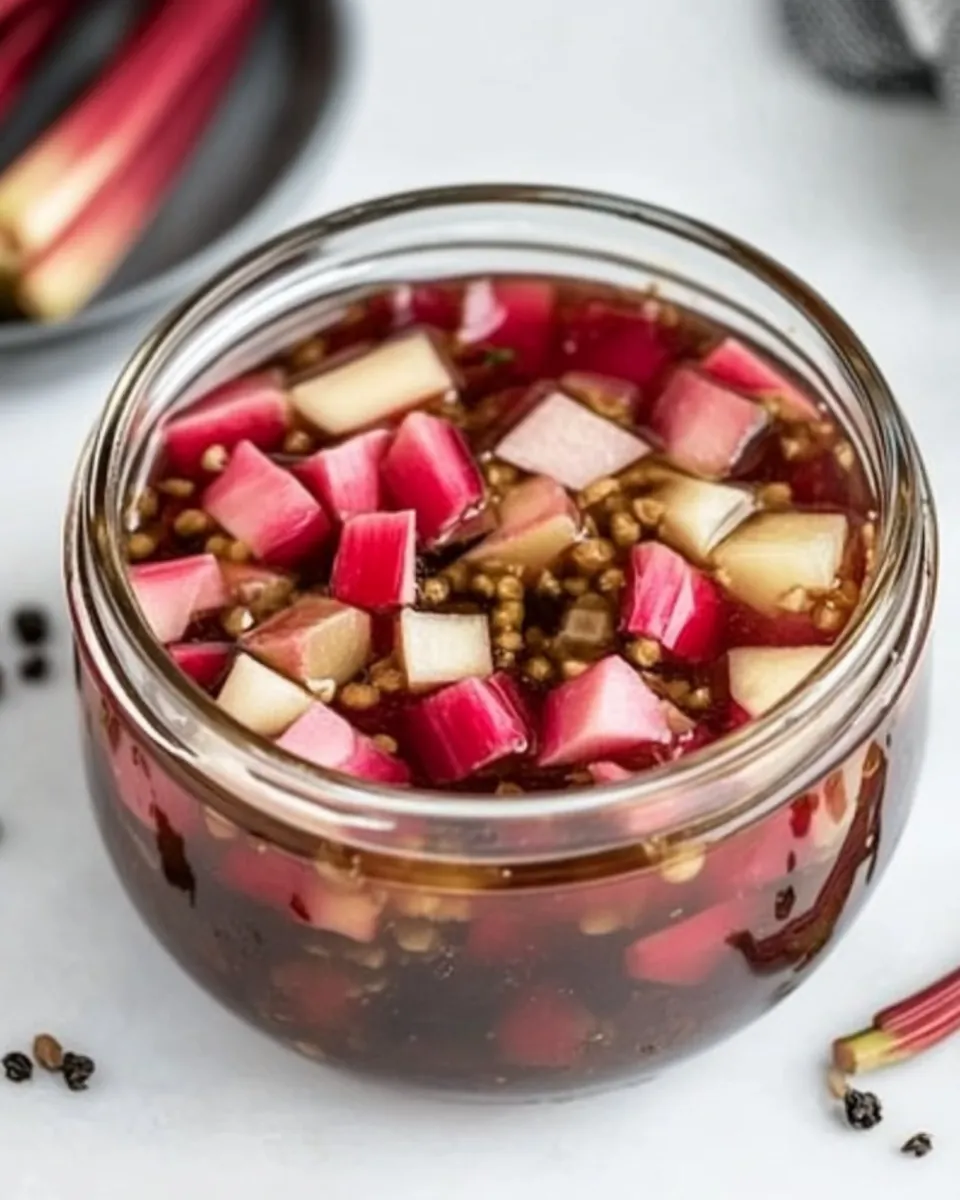
Pickled Rhubarb
Ingredients
Equipment
Method
- Fill a quart jar with rhubarb and garlic; set aside.
- Add remaining ingredients to a saucepan and bring to a boil. Immediately, carefully pour boiling liquid over the rhubarb, enough to just cover the rhubarb. Let cool completely, then cover and refrigerate at least 24 hours, and up to 1 month. Pickled flavor and a softened texture will increase with time.
Notes
- Tip 1: Make sure your jars are properly sterilized to avoid spoilage.
- Tip 2: The longer you let the rhubarb sit in the pickling solution, the better the flavor will be.
- Tip 3: Store your pickles in the refrigerator for up to one month.
- Tip 4: Use fresh, firm rhubarb for the best results.
- Tip 5: Experiment with different spices to customize your pickled rhubarb!