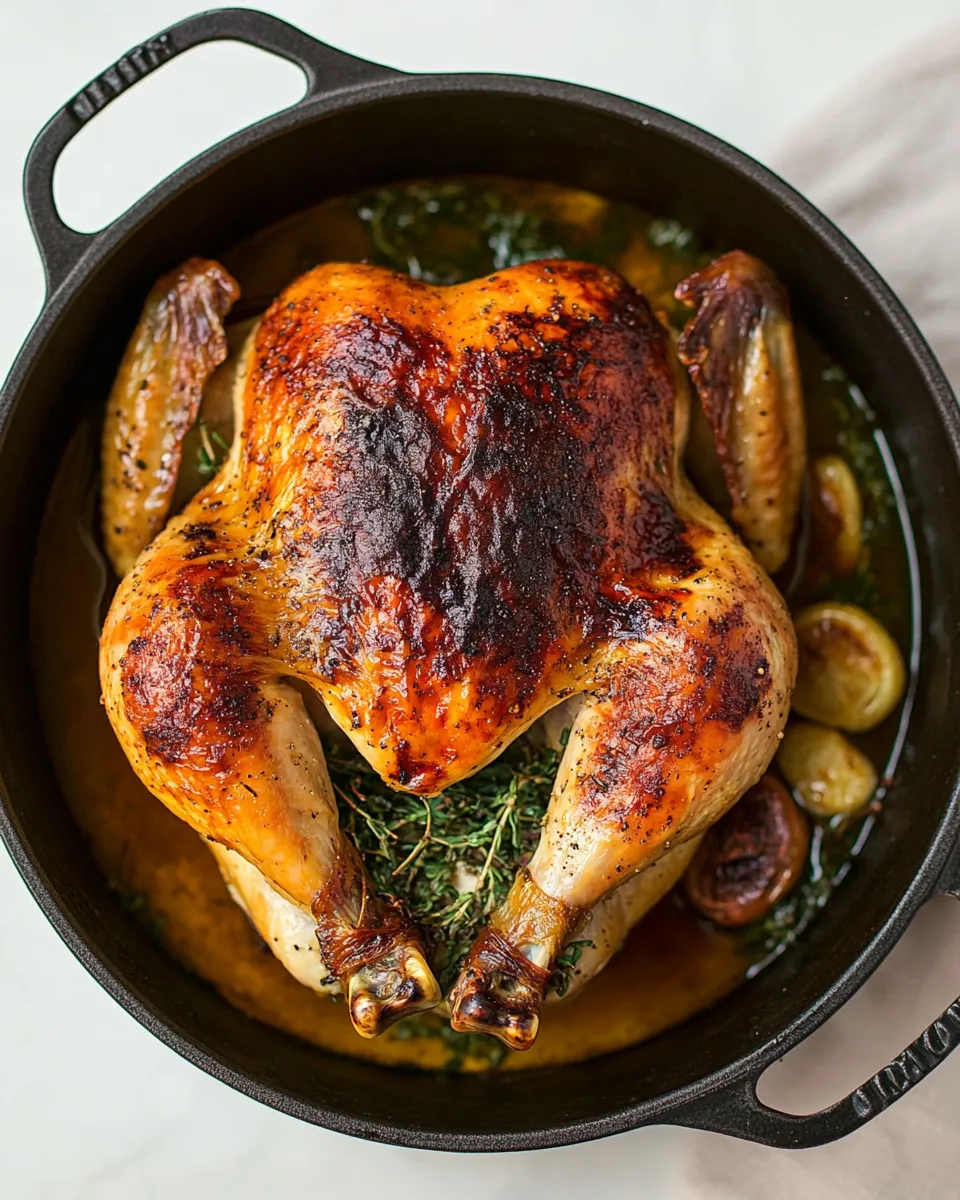
Start by removing the neck and any giblets from the cavity of the chicken. You can either freeze them for later use or discard them. This step helps ensure a clean roast.
Next, prepare a gallon-size resealable freezer bag and place it inside a large bowl to prevent spills. Carefully place the chicken in the bag, positioning it so that the upper portion faces the bottom and the legs point toward the opening.
In a mixing bowl, combine the buttermilk, kosher salt, black pepper, garlic, rosemary, and thyme. Whisk these ingredients together for about thirty seconds until well blended.
Pour the marinade over the chicken, ensuring that some of it seeps into the cavity. This will help flavor the meat from the inside out.
Seal the bag while pressing out as much excess air as possible. Rub the marinade all over the chicken, ensuring it’s evenly coated. This helps to impart flavor throughout the meat.
Transfer the bag to the refrigerator and let the chicken marinate for at least twelve hours, or up to twenty-four hours. If possible, turn the bag halfway through to ensure even marination. I recommend laying the chicken breast side down for the best results.
When ready to roast, preheat your oven to 400 degrees Fahrenheit. This high temperature will help achieve a crispy skin.
Remove the chicken from the marinade, pouring out any excess liquid from the cavity. Scrape off any remaining marinade on the outside of the chicken.
Transfer the chicken to a twelve-inch cast iron skillet or a small roasting pan. Tuck the wings underneath the chicken and, if desired, truss the legs together with kitchen twine for a more polished look.
Have a sheet of foil ready to tent over the chicken if it starts to brown too quickly. Depending on your oven, the chicken may reach a golden color within thirty to forty-five minutes.
Place the pan in the center of the oven and roast for forty minutes. After that time, rotate the pan to ensure even cooking, as the back of the oven typically cooks faster.
Continue roasting until the thigh registers 175 degrees Fahrenheit and the breast reaches 160 degrees Fahrenheit in the thickest portion, which should take an additional thirty to forty-five minutes.
Once cooked, carefully transfer the chicken to a cutting board. Allow it to rest for fifteen minutes before carving. After carving, sprinkle the slices with a little extra salt to enhance the flavor.