Ingredients
Equipment
Method
- Start by taking your rotisserie chicken and remove the meat, leaving just the bones and skin. This is where the magic begins. Place the chicken bones into a large pot, ensuring that you get every bit of goodness.
- Next, chop your celery, carrots, and onions into chunks. Don’t worry about making them look perfect; they’ll be strained out later. Add these vibrant vegetables to the pot, layering them with the bones.
- Now, it’s time to season! Toss in the bay leaves, dried rosemary, dried thyme, and whole peppercorns. These herbs will infuse the stock with their aromatic qualities as it simmers.
- Pour in about eight cups of cold water, covering the ingredients. Cold water is crucial as it helps extract flavors more effectively.
- Place the pot on the stove over medium heat and slowly bring the mixture to a boil. As it heats, you’ll notice some foam rising to the surface. This is normal—just skim it off with a spoon. It helps keep your stock clear.
- Once boiling, reduce the heat to low, cover the pot, and let it simmer gently. The key here is patience; let it simmer for at least two hours, but longer if you can. This allows all those rich flavors to meld beautifully.
- After your stock has simmered to perfection, remove it from the heat. Allow it to cool slightly before straining.
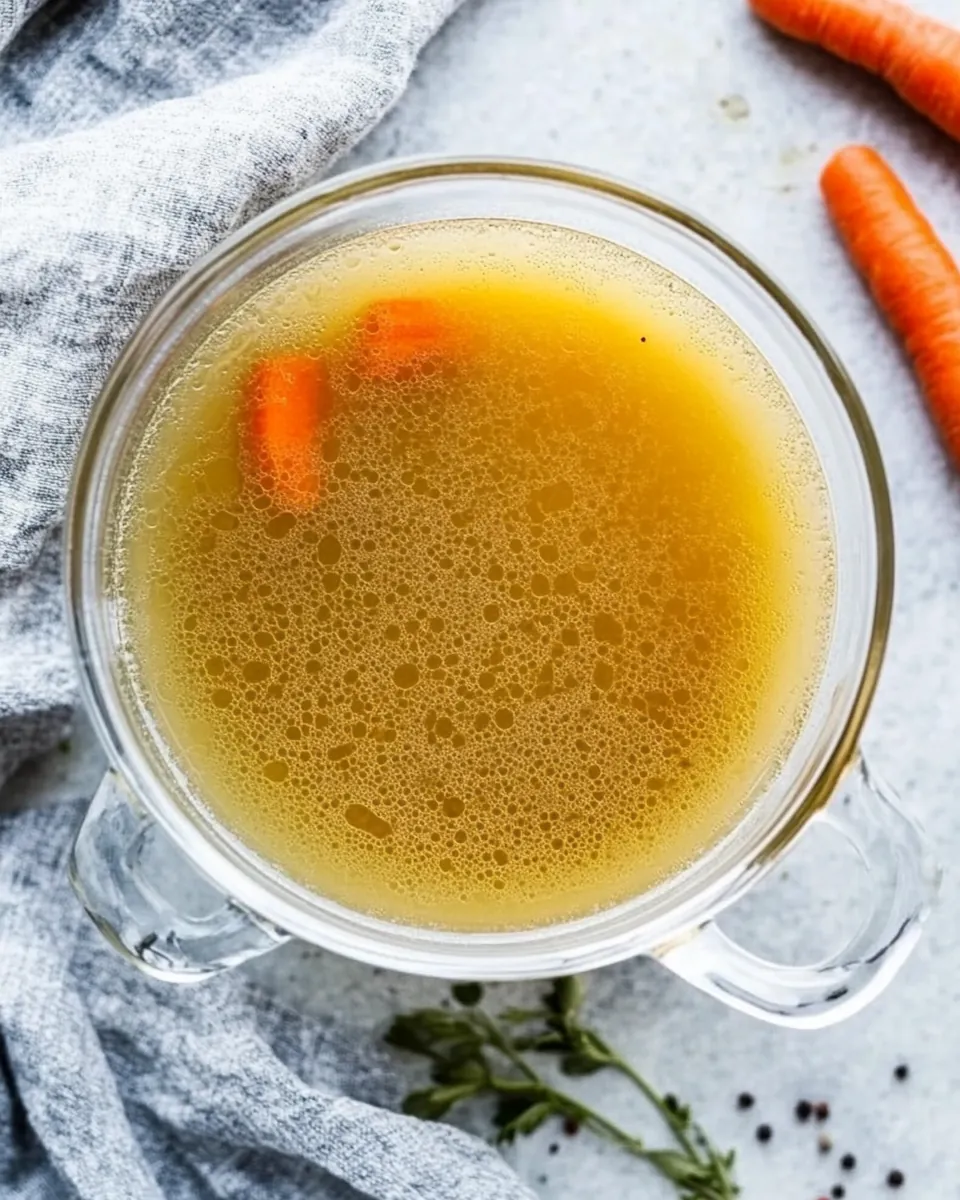
- Using a fine mesh strainer, carefully pour the stock through, discarding the solids. You should only have a lovely, golden liquid left. This is your homemade Chicken Stock.
- For an added depth of flavor, season your stock with the Better than Bouillon Chicken Paste. Taste and adjust as necessary.
- Store your freshly made stock in the refrigerator for up to three to four days. If you’re not using it right away, consider freezing it in batches for future use.
Notes
Yields about 8 cups of stock.
- Storage: Homemade stock can be stored in the fridge for up to four days. Make sure it’s in an airtight container to maintain freshness.
- Freezing: For longer storage, freeze your stock in freezer-safe bags or containers. Date them for easy tracking. They can last for up to three months.
- Pairing: Use your stock as a base for soups, risottos, or sauces. It’s a fantastic way to enhance flavor in many dishes.
- Ingredient Substitution: If you don’t have a specific herb, don’t worry! You can swap in others that you have on hand while keeping the core ingredients.
- Texture: Your stock might develop a gelatin-like texture when cooled, which is perfectly normal. It will liquefy once reheated.