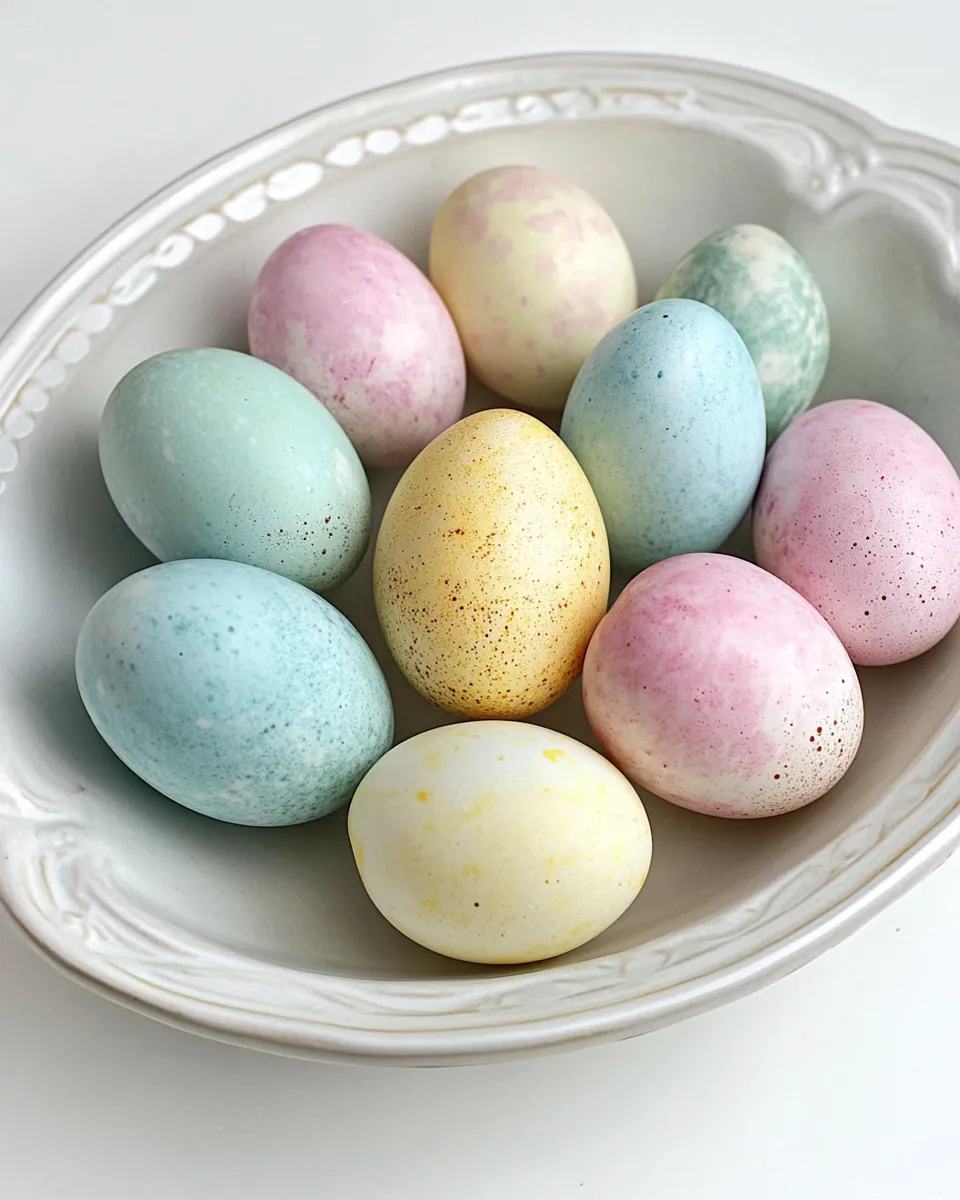
Before starting the actual egg-dying process, I recommend preparing a safe area to handle these highly-staining dyes – they will mark everything from clothes to kitchen counters! So be sure to cover your table or counter with plastic, an old throw-away tablecloth, or lots of newspapers before beginning.
Place cabbage and water in a medium-sized pot over high heat. Bring to a boil, then cover and remove from heat. Let sit for 1 hour. Pour mixture through a colander to remove cabbage; discard solids. Stir in vinegar. Your dye is ready to use.
To dye, fill a narrow glass or mason jar about half full with dye, and gently lower in a hard-boiled egg. Let sit for about 20 minutes, turning occasionally. Note: the egg will appear lavender when you first remove it from the dye, but the shade should transform to a more blue-ish shade within a few minutes.
Place turmeric and water in a medium-sized pot over high heat. Bring to a boil. Remove from heat and cover. Let sit until cool. Stir in vinegar. Your dye is ready to use.
Fill a narrow glass or mason jar about half full with the dye, and gently lower in a hard-boiled egg. Let sit for about 30 minutes, turning occasionally, until you’ve reached the shade of pale yellow that you desire.
Place beet and water in a medium-sized pot over high heat. Bring to a boil. Cover and remove from heat. Let sit for 60 minutes. Drain through a colander to remove beet pieces and discard solids. Stir in vinegar. Your dye is ready!
To dye, fill a narrow glass or mason jar about half full with the dye, and gently lower in a hard-boiled egg. Let sit for about 2 minutes, turning occasionally, until you’ve reached the shade of pink that you desire.
Using a slotted spoon, carefully remove the eggs from the dye and set them in a shallow bowl. Or if you have wire egg holders, now is a great time to use them! Turn the eggs occasionally to help them dry, which should take about 20 minutes or so. Once they’re mostly dry, wipe off any excess dye with a paper towel.
If desired, gently rub a little olive oil onto each egg to add a bit of a pretty sheen.
Keep your eggs in the refrigerator just as you would any hard-boiled eggs!